
 Chinese


 Current Location:
-
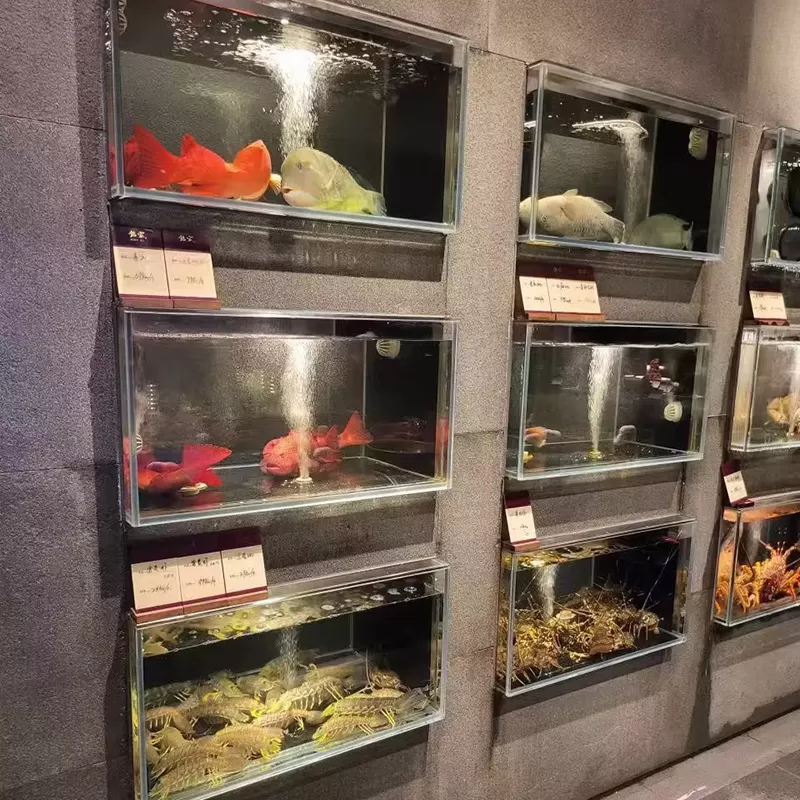
How can customized fish tanks meet the needs of seafood display and breeding in the catering industry
-
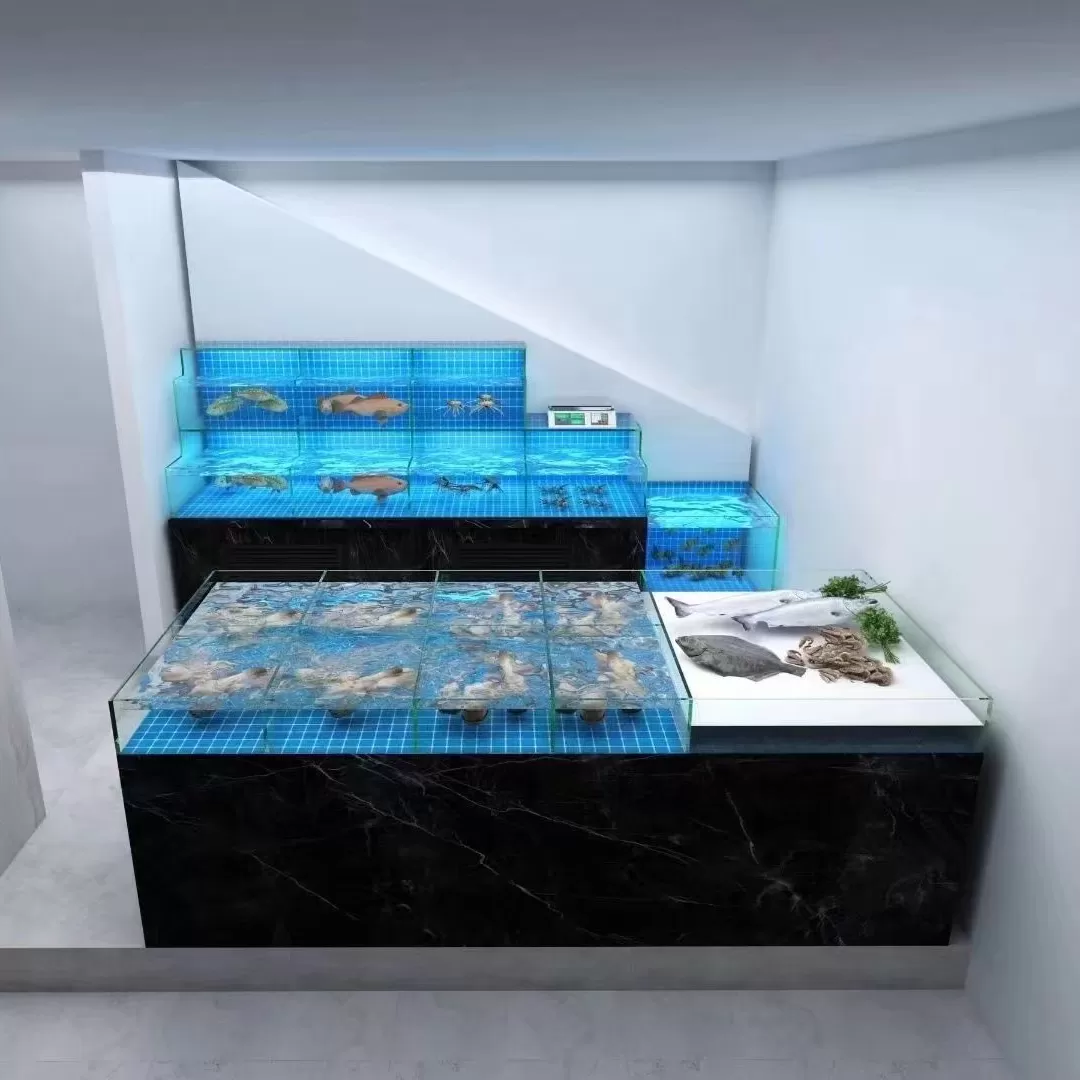
How to plan a customized fish tank? A Guide to Avoiding Pitfalls in the Design and Selection of Seafood Tanks for Catering
-
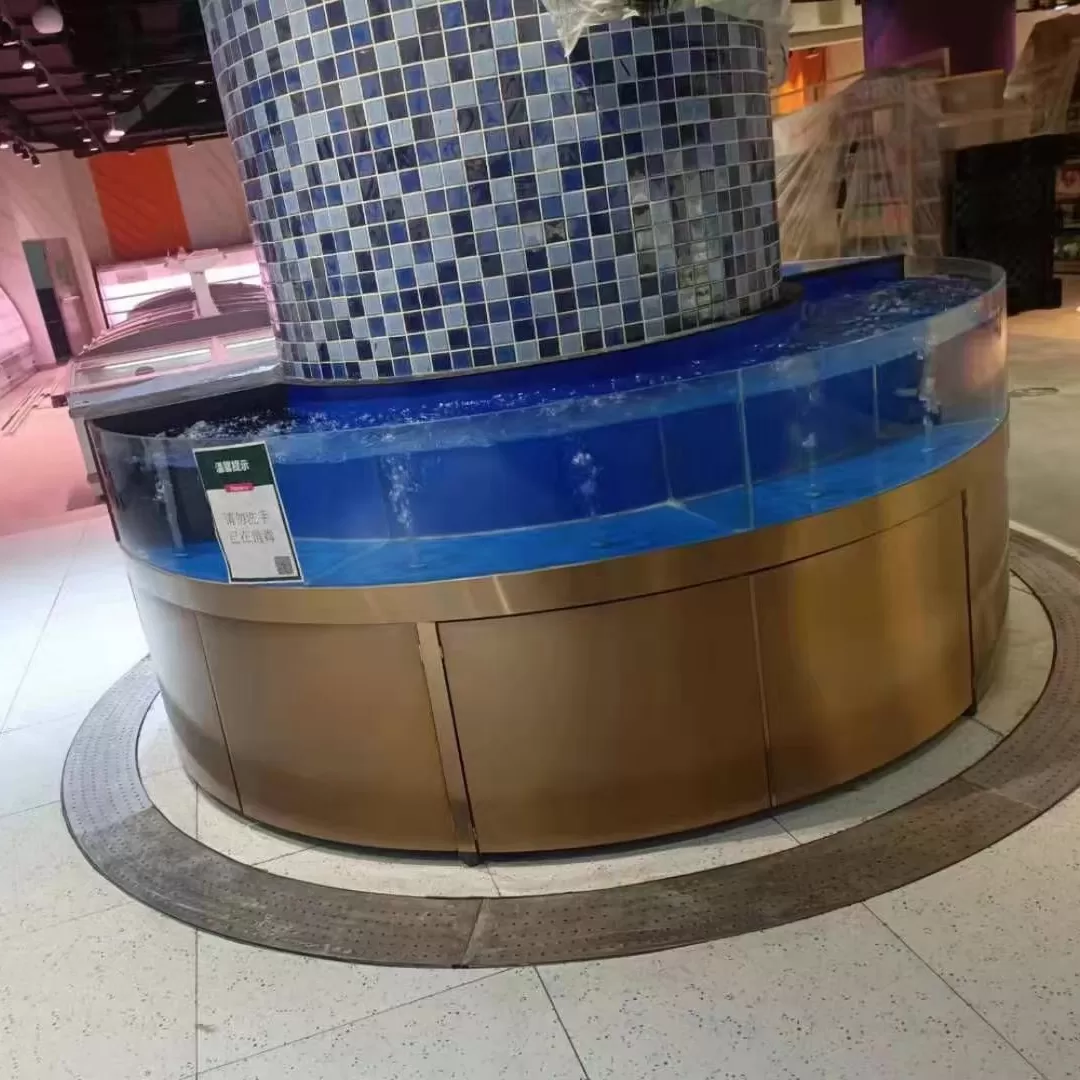
Column-wrapped arc-shaped stainless steel catering and aquaculture seafood tank: An integrated solution for commercial space column renovation and high-density aquatic product temporary breeding
-
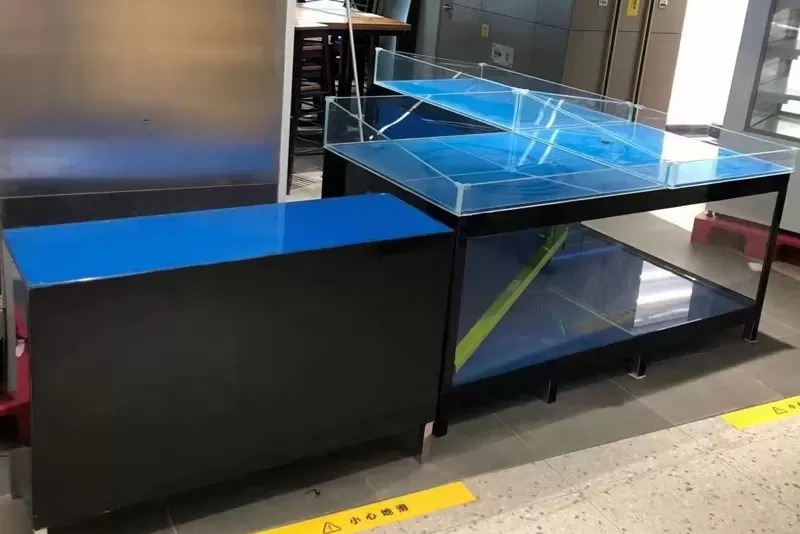
How can customized fish tanks solve the problem of corner Spaces in restaurants? Design Guide for High and Low Stratified Seafood Tanks
-
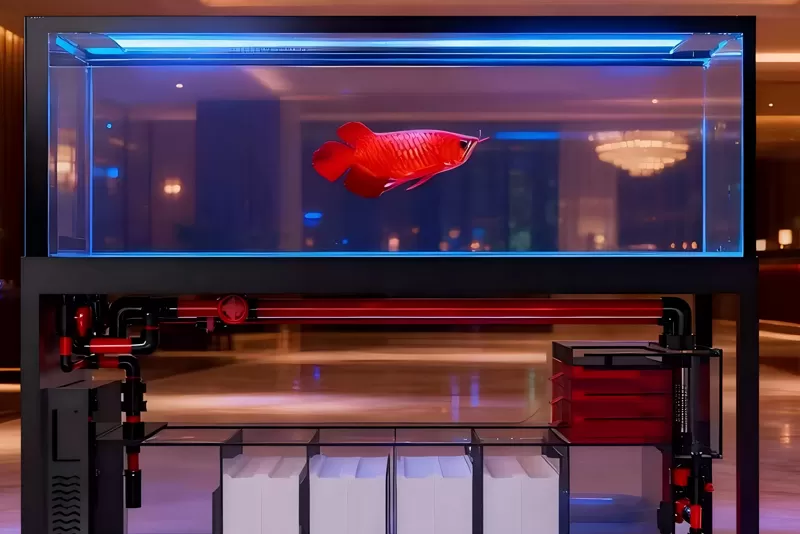
Customized Guide to Large Bottom Filter Red Dragon Fish Tanks: Structural Design and Water Circulation System Analysis
-
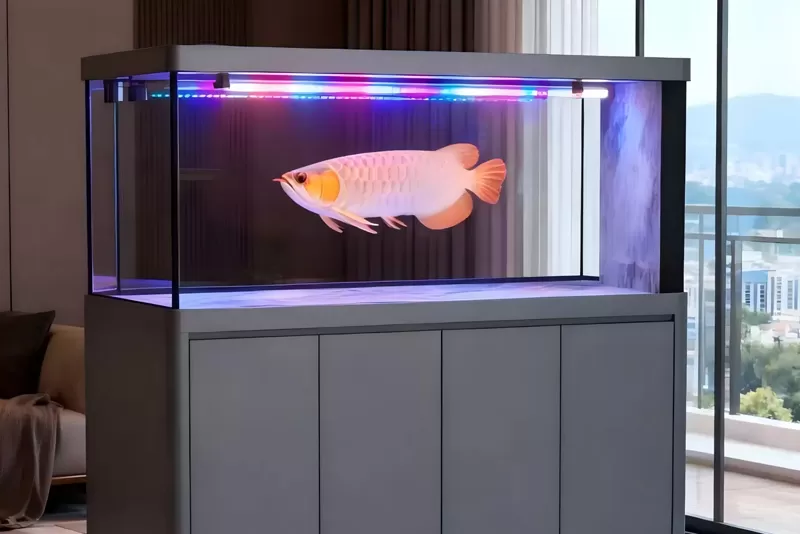
A minimalist grey four-door dragon tank aquarium selection guide and bottom filter system maintenance tutorial

Online consultation
If you have any questions, please contact our online customer service staff immediately
Precautions for customizing seafood pools, storefront stall plans, salinity and temperature control, and key points of construction
 Click:126
 Time:2026-10-26 15:02:37
 Author:艺景水族
Many restaurants and fresh aquatic product stores only consider customizing seafood tanks during the decoration stage, which often leads to problems such as insufficient reserved water supply and drainage, inadequate temperature control, and inability to temporarily raise different types of seafood in separate tanks. The loss of seafood remains high, and the display effect of the stalls is poor. Eventually, they have to be reworked and renovated, which adds a lot of extra costs. Customizing a seafood pool is not merely about making a water tank, but a temporary breeding system that suits the operation of the store. The details of the early planning directly determine whether the subsequent operation is worry-free.
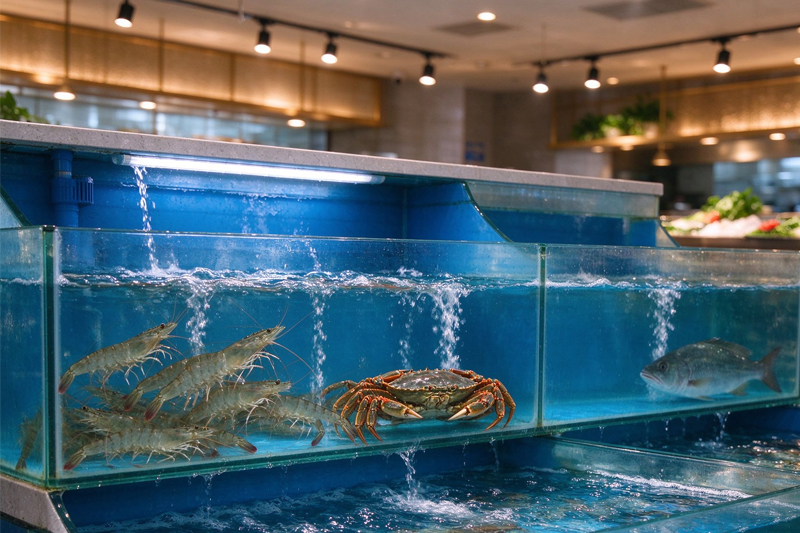
For different business types, the focus of seafood pools is completely different, and the same solution cannot be directly applied. At the counter in the front hall of a restaurant, the display effect and the stability of temporary breeding are given priority. Guests can directly see the live aquatic products. Generally, a compartments design is made, and fish, shrimp, crabs and shellfish are raised separately. The backup temporary storage pool in the kitchen places more emphasis on practicality and has lower requirements for appearance. The focus is on enhancing the filtration and oxygenation capabilities. Aquatic product wholesale stores have high stocking density and fast turnover, so they need a large-flow circulation system to facilitate quick sorting and water replacement.
After determining the scene, it is also necessary to sort out the temporary care categories. Marine fish, flower crabs, lobsters and shellfish have different requirements for salinity and water temperature. Lobsters are suitable for low temperatures, while shellfish have high demands for dissolved oxygen. When they are raised in the same pool together, it is very easy for them to die due to stress. Therefore, when customizing a seafood pool, multiple independent compartments can be made according to the requirements. Each compartment can control the temperature and adjust the salt independently without interfering with each other.
The water circulation and oxygenation system determine the survival rate of temporary rearing
Many merchants mistakenly believe that as long as they keep changing the water, the seafood will survive. In fact, frequent water changes can actually cause fluctuations in water quality. A stable water circulation system is the core of the seafood pool. The conventional configuration is divided into two layers: physical filtration and biochemical filtration. Filter cotton and brushes are used to intercept leftover feed and feces. The biochemical filter material is used to cultivate nitrifying bacteria to decompose ammonia nitrogen in water, reducing the odor and turbidity of the water body. In coordination with the oxygenation pump and air pan, ensure that the dissolved oxygen in the water body is sufficient. Here is an industry experience: The recommended filtration flow rate is to circulate the entire pool of water 3 to 5 times per hour. For higher density levels, the frequency can be increased to more than 5 times. If the filtration configuration is too small, even if the water is changed every day, the water quality is likely to deteriorate rapidly and the loss will continue to increase.
Several pitfalls that are prone to be stepped into during on-site construction
The on-site construction of a custom-made seafood pool is a step that many merchants tend to overlook. The first is load-bearing capacity. When a large seafood pool is filled with water, it is very heavy. If it is placed on the second floor or on the floor slab, it is necessary to confirm the load-bearing capacity of the floor slab in advance. If necessary, reinforcement treatment should be carried out to avoid potential safety hazards. The second is drainage. Anti-suction fish covers should be installed at the drainage outlets to prevent seafood from being sucked away. Reserve a slope for the pipeline to prevent water accumulation and odor. The third is noise reduction. The operation of the circulating pump and the refrigeration machine will generate noise. For the seafood pool adjacent to the dining area, low-noise equipment should be selected and shock absorption treatment should be done well to avoid affecting the dining experience of customers. The fourth is waterproofing. The joints of the pool and the pipe interfaces must be well protected against seepage to prevent water from soaking the ground and walls.
Post-maintenance supporting planning
The delivery of the seafood pool is not the end; only regular maintenance can ensure its stable operation. When communicating the plan in the early stage, maintenance openings can be reserved in advance to facilitate the cleaning of filter materials and the maintenance of the refrigeration main unit in the later stage. At the same time, confirm with the service provider that salinity meters, thermometers, and residual chlorine testing tools are provided to facilitate the daily monitoring of water quality by the staff. Overall, the core of customizing a seafood pool lies in its alignment with the store's business format, adaptation to the types of fish being farmed, and proper zoning, water circulation, temperature control, and on-site construction. Only by conducting early surveys and making reasonable layouts can the loss of seafood be reduced, ensuring the stable and long-lasting display of fresh products at the stalls and facilitating the operation of the stores.


 Tel: 13530938627
 Email: 360801901@qq.com
 Fax: 0755-23469932
 Address: Unit 1, Building 3, Xinji Industrial Park, Baoshi East Road, Guantian Community, Shiyan Subdistrict, Bao'an District, Shenzhen, Guangdong, P.R.China


 13682357508
 Home
 Products